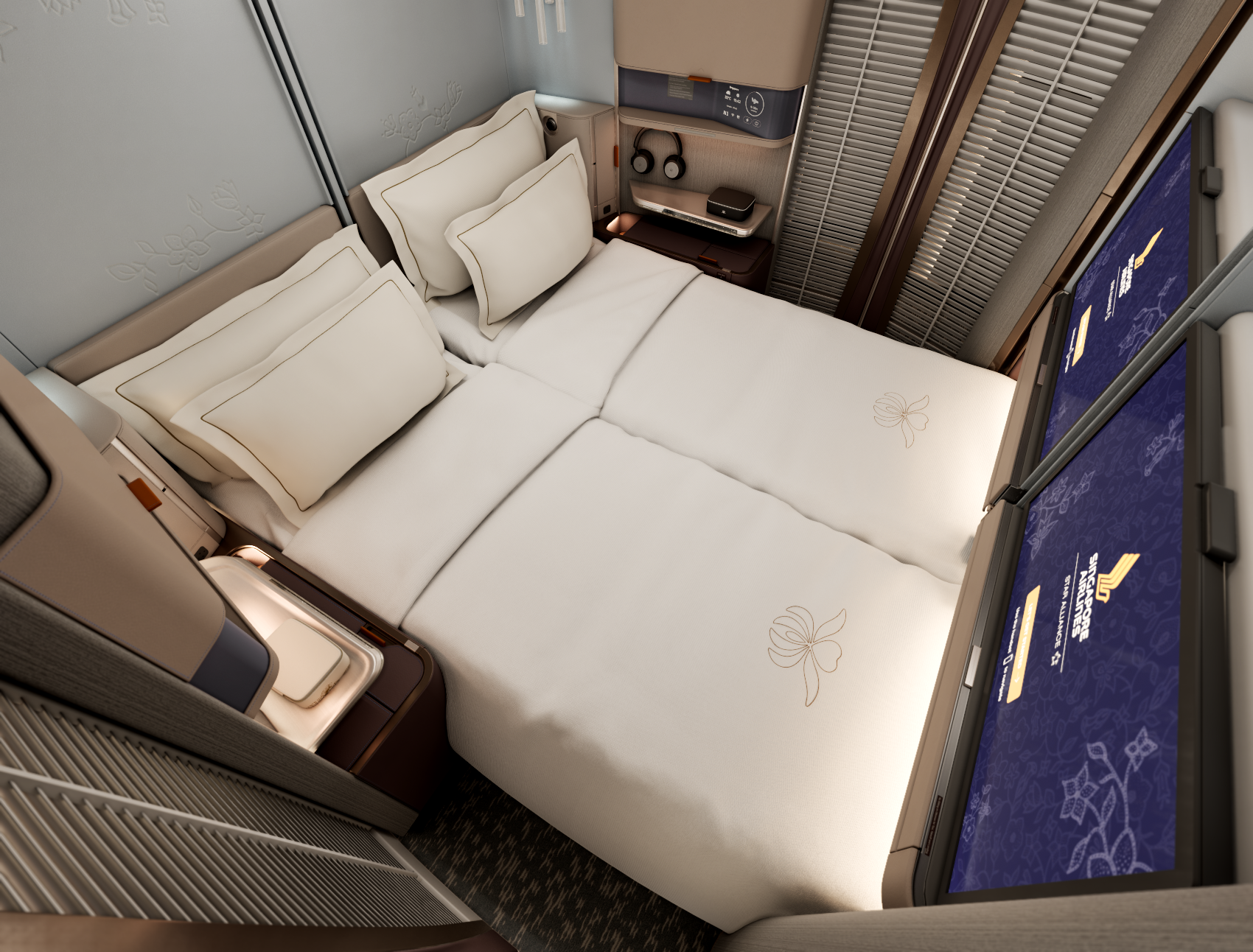
Singapore Airlines announced its new First Class, Business Class, Premium Economy and Economy cabins on 6th November 2026, backed by more than S$2 billion (roughly US$1.5 billion) of investment. The products begin arriving in the second half of 2027 on 41 retrofitted Airbus A350-900 long-haul and A350-900ULR aircraft, plus the all-new Boeing 777-9.(Singapore Airlines, 2026)
I have been through the release closely, and the headline is simple: every cabin is changing. The question that matters is what those changes feel like in the seat, and that’s where my view gets more mixed. I haven’t sat in any of this yet, so everything here comes from the press materials and the launch video, with my own reactions layered on top.
The chief executive, Goh Choon Phong, presents the launch as another step in an ongoing effort to earn and keep customer trust, rather than a finish line.(Singapore Airlines, 2026)
Is the new First Class suite worth the wait?
The aircraft matter more than the headline suggests. The 777-9 is the main home for the new cabins, but the A350-900ULR is the one I find most interesting. It flies the non-stop service to New York, and it is currently configured with Business and Premium Economy rather than First. Adding First Class to a route that long is a bigger change than it first appears.

On space, I’ll be upfront. The A380 sets the standard for First Class, and smaller aircraft such as the A350 and 777 simply have less room to play with. What Singapore Airlines has done with the available space looks impressive. The window seats get a blackout blind alongside a diffused blind that softens the light without making the cabin feel dark, and I like that a lot.


The main trade-off is the lack of a dedicated bed. There isn’t room for a separate chair and bed on this footprint. Cathay Pacific shows that a dedicated bed isn’t the only route to a good night’s sleep. I have seen its bedding up close, and it’s excellent, so Singapore Airlines has a benchmark to meet.


The centre seats are where I’m most cautious. They are clearly aimed at couples, and that creates the problem Lufthansa has run into with its own middle seats. A solo traveller may be pushed towards paying for two seats, which is the awkward part. Singapore Airlines has at least given each passenger a dedicated seat rather than one wide bench, and the armrests create some separation. I can’t see a physical divider rising from the floor in this footprint, though, so solo travellers should take the window. (It is still unclear whether single bookings will be allowed in the centre pair.)


The doors look to be around five feet tall, which I’d put close to the A380 suite. The ottoman that lifts to reveal luggage storage is a practical answer to a common problem, because bags shoved under a seat are a constant headache. Wireless charging, though, is a gimmick. Faster USB-C at up to 100W would matter far more, and a phone is unlikely to stay put on that smooth surface without grip or MagSafe. (I’d have to see it for myself before ruling it in or out.)


Does Business Class go far enough?
This is where I’m least sold. Most of the current Singapore Airlines Business seats don’t recline straight into a bed. The seat is flipped forward, and a proper bed comes out, which needs manual handling and crew involvement for safety reasons. The new seat reclines fully into a bed instead. I understand the logic, because it’s easier to control and it lightens the load on crew. The older design does offer more headroom, though, and I want to test whether the new seat is an upgrade in practice before I call it one.

The styling is the other issue. There is a lot of grey, and the yellow accent gives me a touch of Ryanair. That’s minor, but it isn’t the feeling I want from this product, and the darker brown would have been the better choice. The fabric back should keep the cabin quieter, which I have seen work well at Finnair’s Air Lounge. The divider drops lower than usual so partners can reach across, and I’d like to see how that holds up in service.


The storage area suits small items like tablets and laptops, although I’m always likely to leave something behind. The tray table looks sturdy enough for real work, which is a genuine plus for anyone flying on business.


What does this mean for everyone else on board?
Premium Economy looks more like a refresh than a reinvention. Singapore Airlines already has a strong product there, so I’m surprised it hasn’t pushed harder, especially on its longest flights. Economy is mostly about the screens, and the OLED displays on selected aircraft are the highlight.


The soft product is where I expect the changes to land best. Sisley goes to First and Suites, Byredo to Business, and Ink & Water to Premium Economy, with a collectible pouch in Economy. Business also gains sleeper suits for the first time, which matters on the long Europe routes. The airline says it has added more than 100 new and refreshed dishes across the cabins.(Singapore Airlines, 2026)

Starlink is the feature I’m least excited about personally, but I can see why business travellers will value it. The release lists Starlink on the A380, A350-900 long-haul and A350-900ULR, without a fleet-wide date, and it doesn’t include the 777-9 in that list. Without a fleet-wide date, I wouldn’t choose a flight on the strength of it.
On the ground, S$130 million is going into the SilverKris lounges, including full-service dining in the First lounges in Singapore. New Changi ground services for First and Suites customers include priority immigration and security clearance.(Singapore Airlines, 2026)
This is an impressive set of upgrades from the airlines particularly in the space they are working with. First Class looks excellent, albeit with some concerns around those centre seats, while Business Class looks good even if the colour scheme hasn’t sold me fully yet. Singapore Airlines have needed a boost to their hard product to match the rest of the elements, will it help them capture customers from competitors who are improving too?
Leave a Reply