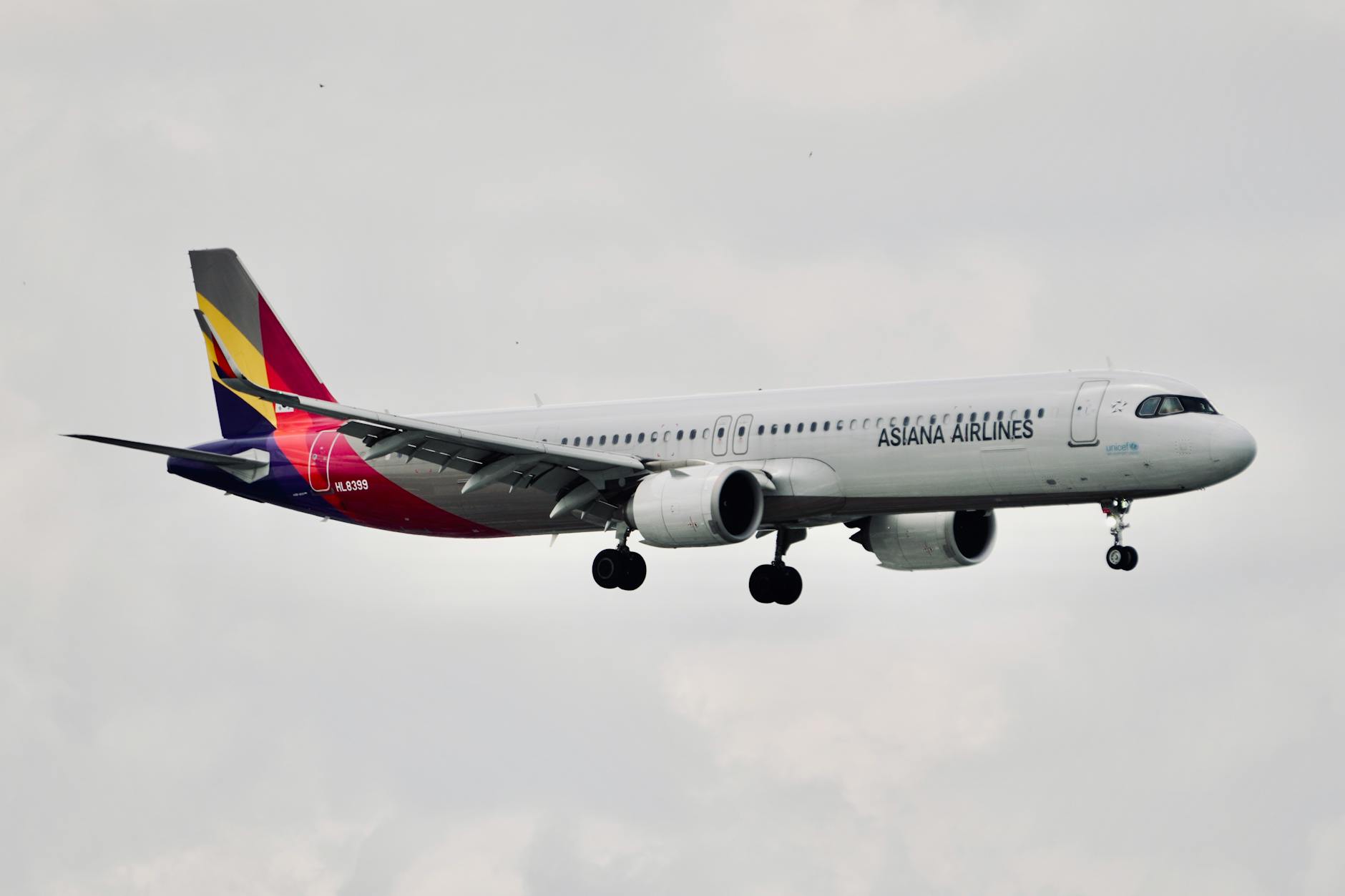
Korean Air and Asiana Airlines will formally merge on 17th December 2026, completing a consolidation process that began in November 2020. The merger agreement was approved by both boards on 13th May 2026, with the contract signed on 14th May. When the integration completes, the Korean Air Asiana Airlines merger will erase one of Asia’s most recognised airline brands and shift roughly half of South Korea’s domestic aviation market under a single flag carrier. That is worth examining carefully before anyone celebrates it as straightforward good news.

What actually happens on 17th December 2026?
The short answer is: quite a lot, though not all at once. Korean Air will absorb all of Asiana’s assets, liabilities, staff, and routes under a single Air Operator Certificate. Asiana’s aircraft will be rebranded. More importantly for frequent flyers, Asiana will leave Star Alliance on that date and its passengers will transfer into Korean Air’s SkyTeam ecosystem. If you hold Asiana miles or elite status, you will need to migrate to Korean Air’s SKYPASS programme. Award availability, recognition policies, and partner benefits may all change overnight, and the timetable for exactly how and when each element transfers has not been fully confirmed.
Air Busan, Asiana’s low-cost subsidiary, will be absorbed into the Korean Air group. Air Seoul will be wound down entirely. South Korean travellers who relied on budget options for domestic and short-haul routes will find their choices noticeably narrower. Whether that translates into higher fares on those routes is unconfirmed, but it is not an unreasonable concern.

Is the loyalty programme disruption going to be painful?
Probably, yes, depending on your situation. The loyalty consolidation is still being finalised in coordination with the Korea Fair Trade Commission. Star Alliance status holders who built recognition through Asiana flights face the most acute disruption: switching alliance ecosystems at short notice, potentially losing partner benefits they had specifically accumulated. Infrequent travellers on Seoul routes will notice rebranding and lounge changes but may see little immediate difference in everyday fares. The problem is the transition window around December 17th, when brand identity, seat maps, mileage balances, and elite recognition will all be migrating onto Korean Air’s systems, but not necessarily on the same day or under the same timetable. Expect confusion. Plan accordingly.
The regulatory process around the loyalty merger is ongoing, which means the exact terms of mileage conversion are not locked in yet. Anyone with a large Asiana miles balance should watch this space closely in the months before December.

Should passengers be concerned about what a near-monopoly means for fares?
This is the question the press release does not address, and it deserves attention. The combined carrier holds approximately 50% of South Korea’s local aviation market share (a figure cited by multiple industry sources, including CAPA). Critics of airline consolidation have argued for years that mergers at this scale tend toward market abuse, price increases, and deteriorating service quality on routes where competition has been removed. With South Korea moving from two full-service international carriers to one, the pricing discipline that Asiana and Korean Air previously applied to each other on transpacific and intra-Asian routes is gone. On routes where no foreign carrier offers a direct alternative, passengers have limited leverage.
The closest structural precedent is Delta Air Lines absorbing Northwest Airlines in 2008 (paying approximately $2.8 billion to secure Northwest’s trans-Pacific routes and hubs in Detroit and Minneapolis). That deal is widely described as the model airline merger, producing a profitable global carrier over several years of integration. But it also occurred in a market with Southwest, United, American, and others still competing vigorously on domestic routes. The South Korean domestic market has no comparable safety net of competing full-service carriers.
Analysts who have studied the Delta-Northwest integration note that it took several years to stabilise operationally and ultimately produced a profitable global carrier, but it is worth remembering that Delta absorbed Northwest into a market with far more competitive pressure than Korean Air faces at home.

The combined entity is now ranked as the world’s 10th largest airline by international passenger volume, and Korean Air’s capital is expected to increase by approximately KRW 101.7 billion (around USD 68.18 million) following the merger. These are real gains, and the Incheon hub will genuinely benefit from consolidated connectivity. But gains for the airline are not automatically gains for the passenger.
What happens between now and December?
Several regulatory steps remain. Korean Air will submit a merger application to South Korea’s Ministry of Land, Infrastructure and Transport following the 14th May contract signing. In June 2026, it will apply to amend its Operations Specifications to bring Asiana’s aircraft and safety systems under Korean Air’s existing Air Operator Certificate. International aviation authority filings will follow once domestic approvals are secured. An extraordinary general meeting of Asiana shareholders is scheduled for August 2026 to formally approve the merger terms. (The merger ratio is set at 1 Korean Air share to 0.2736432 Asiana shares, calculated under Korea’s Capital Markets Act using weighted average closing prices.)

The broader aviation context is not ideal timing. Airlines worldwide cut more than 150,000 international flights between March and June 2026 compared with pre-war schedules, driven by fuel costs and Middle East-linked disruptions. Merging two major carriers in that environment adds operational complexity that should not be underestimated.
On 17th December 2026, Korean Air will formally absorb Asiana Airlines, ending the brand after decades as South Korea’s second international carrier and moving its passengers, routes, and loyalty members into the SkyTeam ecosystem. For travellers, the most immediate action is checking mileage balances and elite status before the loyalty migration terms are finalised, particularly if you are a Star Alliance member with significant Asiana history. The exact post-merger fare trajectory on overlapping routes remains unconfirmed, but with half of South Korea’s market now under one roof, it is a question worth revisiting once December’s dust settles.
Leave a Reply